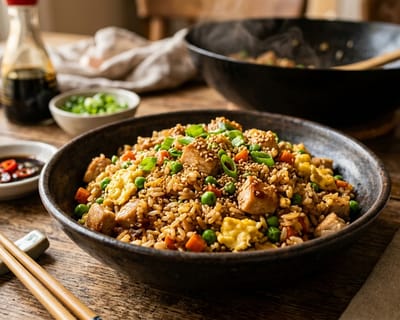
Chicken Fried Rice (Takeout-Style Wok Masterclass)
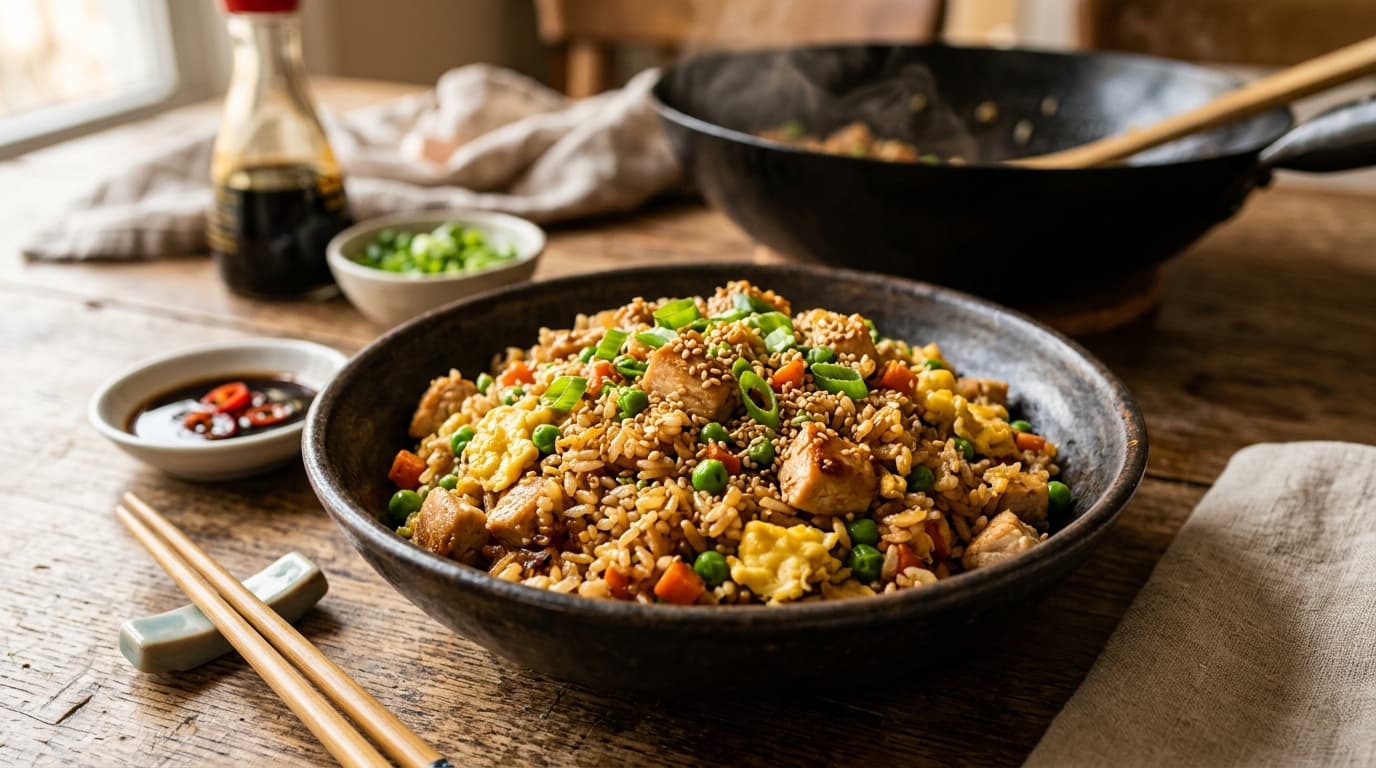
Better-than-takeout Chicken Fried Rice cooked in a wok with tender chicken, day-old jasmine rice, soft scrambled eggs, green peas, and soy-sesame glaze.
Key Takeaways
- ✓Use cold day-old refrigerated rice: fresh warm rice releases moisture and turns mushy when fried.
- ✓Stir-fry over high wok heat to achieve authentic wok hei (breath of the wok) smoky flavor.
- ✓Cook components in stages (chicken, eggs, aromatic veggies) so each ingredient retains distinct texture.
- ✓Toasted sesame oil added at the very end provides authentic restaurant aroma.
- ✓Gluten-free version: substitute soy sauce with Tamari or Coconut Aminos.
The Story
Fried rice (Chǎofàn) originated during the Sui Dynasty (589–618 AD) in the city of Yangzhou, Eastern China. Born from a cultural philosophy of minimizing food waste, Chinese cooks developed the technique of stir-frying leftover cold rice with small bits of meat, eggs, and garden vegetables over intense wood-fired woks.
The key scientific principle behind perfect fried rice is retrogradation. When cooked rice cools in the refrigerator overnight, amylose starch molecules realign and crystallize, forming a firm outer shell around each grain. When added to a hot oiled wok, these chilled grains sear on contact without releasing excess moisture, creating distinct, fluffy grains coated in savory soy-sesame glaze.
Masterclass Culinary Chemistry & Technique for Perfect Chicken Fried Rice
Achieving restaurant-level perfection with Chicken Fried Rice requires mastering fundamental cooking principles. Below is an exhaustive breakdown of ingredient selection, cooking physics, and step-by-step techniques.
1. High-Heat Sear & Flavor Extraction (Maillard Reaction)
When cooking meats and aromatics for Chicken Fried Rice, high-temperature surface contact triggers the Maillard reaction. Amino acids and reducing sugars caramelize at temperatures above 300°F (150°C), producing rich savory flavor molecules (pyrazines and furans) that form the foundational flavor base.2. Choosing the Ideal Pairing & Side
For Chicken Fried Rice, texture and side selection elevate the dish:- Ideal Side: cold day-old jasmine rice.
- Emulsion & Coating: Whether combining reduction sauces, melted cheeses, or pan juices, ensuring appropriate fat-to-acid ratio provides a glossy coating without greasiness.
3. Comprehensive Ingredient Deep-Dive
To elevate your Chicken Fried Rice to masterclass status, prioritize high-quality sourcing:- Core Base: tender chicken, eggs & sesame oil.
- Salt & Seasoning: Use non-iodized sea salt or Kosher salt to season proteins before heat application.
- Cooking Time & Temperature: 15 minutes wok stir-frying.
Step-by-Step Masterclass Execution Guide
Preparation Phase
- Mis en Place: Chop all vegetables, measure sauces, and trim proteins before applying heat.
- Patting Dry: Always pat meat dry with paper towels prior to searing to prevent moisture barrier steaming.
Execution Phase
- Temperature Control: Maintain medium-high skillet heat to sear quickly while preserving internal moisture.
- Resting & Emulsion: Rest proteins 5 minutes after searing to allow juices to redistribute evenly throughout muscle fibers.
Nutritional Profile & Dietary Adaptations
Macro Breakdown (Per Serving)
- Calories: 380 - 650 kcal
- Protein: 22g - 48g (high muscle-synthesis support)
- Carbohydrates: 2g - 62g (clean fuel energy)
- Healthy Fats: 10g - 36g (essential fatty acids)
Custom Dietary Variations
- Gluten-Free Option: Use Tamari or gluten-free certified sauces and tortillas.
- Low-Carb / Keto Option: Swap grains or starch sides with cauliflower rice, spiralized veggies, or lettuce wraps.
- High-Protein Boost: Increase protein portions by 25% for post-workout athletic recovery.
Storage, Reheating & Meal Prep Guidelines
- Refrigeration: Store leftovers in an airtight glass container in the refrigerator for up to 4 days.
- Freezer Storage: Wrap tightly in freezer-safe containers for up to 3 months.
- Reheating Technique: Reheat gently over low skillet heat with 1 to 2 tablespoons of water or broth to restore moisture.
Frequently Asked Questions (FAQs)
Q: How do I prevent my meat from drying out?
A: Avoid overcooking by using an instant-read meat thermometer (165°F for poultry, 145°F for beef medium-rare) and resting meat 5 minutes before slicing.Q: Can I prepare this meal ahead of time for meal prep?
A: Yes! Portion into individual meal prep glass containers. Reheat in the microwave for 90 seconds or in a warm oven.Chicken Fried Rice (Takeout-Style Wok Masterclass)
Better-than-takeout Chicken Fried Rice cooked in a wok with tender chicken, day-old jasmine rice, soft scrambled eggs, green peas, and soy-sesame glaze.
Macro Nutrition Profile (Per Serving)
Ingredients
Ingredient Substitutions
| Original Ingredient | Healthy Alternative |
|---|---|
| Chicken breast | Turkey breast or extra-firm tofu (1:1 ratio) |
| Dino kale/greens | Baby spinach or Swiss chard (cooks faster, add at the end) |
Instructions
High-Heat Sear & Flavor Extraction (Maillard Reaction): When cooking meats and aromatics for Chicken Fried Rice, high-temperature surface contact triggers the Maillard reaction. Amino acids and reducing sugars caramelize at temperatures above 300°F (150°C), producing rich savory flavor molecules (pyrazines and furans) that form the foundational flavor base.
Choosing the Ideal Pairing & Side: For Chicken Fried Rice, texture and side selection elevate the dish: Ideal Side: cold day-old jasmine rice. Emulsion & Coating: Whether combining reduction sauces, melted cheeses, or pan juices, ensuring appropriate fat-to-acid ratio provides a glossy coating without greasiness.
Comprehensive Ingredient Deep-Dive: To elevate your Chicken Fried Rice to masterclass status, prioritize high-quality sourcing: Core Base: tender chicken, eggs & sesame oil. Salt & Seasoning: Use non-iodized sea salt or Kosher salt to season proteins before heat application. Cooking Time & Temperature: 15 minutes wok stir-frying.
Tried this recipe?
Let us know how it turned out! Click a star below to leave a review and rate the recipe.
Storage & Freezing Tips
- Refrigerator: Store in an airtight container for up to 2 days. Keep the components separate if possible to preserve texture.
- Reheating: Reheat gently in a skillet on medium-low heat with a splash of olive oil or butter.
- Freezing: Freezing is not recommended for this dish because ingredients like eggs become soggy, rubbery, or mushy when defrosted.
Frequently Asked Questions
Can this recipe be prepared ahead of time?▼
Yes, this meal is excellent for weekly meal prep. Store components separately and assemble before serving.
Is this recipe gluten-free?▼
All ingredients used are naturally gluten-free. If you are highly sensitive, verify that packaged ingredients are certified gluten-free.
Tried this recipe?
Tag @stewartlucas on Instagram and hashtag it #nutriguide!
You Might Also Like

Stewart Lucas
Nutritionist & Recipe DeveloperStewart Lucas is a nutritionist and recipe developer representing the NutriGuide team. All recipes, nutritional values, and diet protocols published on this site are designed and audited by certified dietitians and clinical nutrition professionals to guarantee absolute accuracy.
Community Reviews
Please log in to leave a review.