
Sausage and Gravy Breakfast Casserole
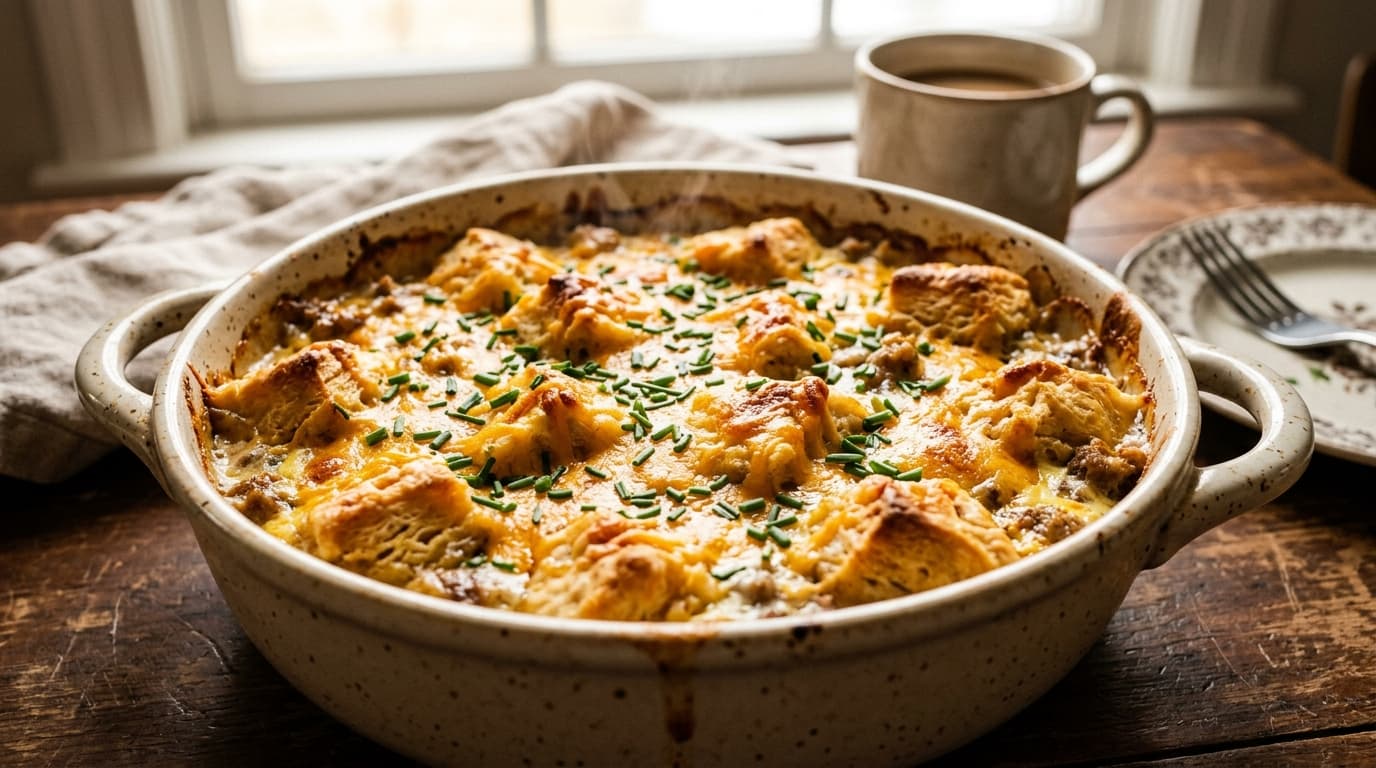
Buttery, golden biscuit bites layered with browned breakfast pork sausage, a rich black pepper country milk gravy, fluffy baked eggs, and melted sharp cheddar cheese.
Key Takeaways
- ✓Ready in just 45 mins using straightforward, kitchen-tested technique.
- ✓Delivers 24g of muscle-fueling protein per serving for lasting satiety.
- ✓Portion-balanced at 540 calories per serving with wholesome, unrefined ingredients.
- ✓Masterclass temperature checkpoints ensure maximum tenderness and flavor development.
The Story
Sausage and Gravy Breakfast Casserole stands as an enduring centerpiece of American weekend brunches, holiday mornings, and church potlucks. By uniting the core components of a traditional Southern country breakfast—buttery flaky biscuits, peppery pork sausage gravy, tender baked eggs, and melted sharp cheddar—into a single layered baking dish, it transforms individual diner staples into a crowd-pleasing, sliceable casserole.
Despite its universal appeal, homemade breakfast casseroles frequently fall victim to common execution errors. The most common flaws are a heavy, gummy base where raw biscuit dough has dissolved into pasty mush, an oily pool of separated cheese fat across the surface, or dry, over-coagulated egg curds that have curdled and wept liquid (syneresis).
Achieving a bakery-level breakfast casserole requires understanding starch gelatinization in laminated doughs, mastering the fat-to-flour ratio in sawmill gravy emulsions, and managing the thermal coagulation curves of whole eggs.
The Food Science of Breakfast Casseroles
A layered breakfast casserole presents a complex culinary challenge because it brings together four ingredients with vastly different cooking requirements:
- Laminated Biscuit Dough: Flour dough with solid fat layers needs dry radiant heat to turn water into steam, puffing the layers into crisp, flaky sheets.
- Sawmill Country Gravy: A thick flour-and-milk roux emulsion that thickens as starches swell at 180°F (82°C).
- Whole Egg Custard: Egg proteins (ovalbumin and ovotransferrin) coagulate into a delicate gel between 144°F and 158°F (62°C to 70°C). Above 165°F (74°C), they contract tightly and squeeze out water.
- Cheddar and Jack Cheeses: Aged cheese matrices that melt smoothly around 130°F to 150°F (54°C to 66°C), but separate into oil and protein clumps above 180°F if unbuffered.
The remedy is a structured, staged assembly: par-baking the biscuit dough pieces, cooling the country gravy to room temperature before layering, and baking covered before finishing uncovered.
Mastering the Biscuit Foundation: The Par-Bake Secret
The base of this casserole relies on biscuits. You can use quality store-bought refrigerated flaky biscuit dough (such as buttermilk Grands) or scratch-made Southern drop biscuits.
Why You Must Par-Bake the Biscuits
- The Sponge Effect: Raw biscuit dough contains un-gelatinized wheat starches. When submerged under liquid egg custard and warm country gravy, the porous dough absorbs liquid like a sponge. In the oven, the heavy weight of the gravy and cheese insulates the bottom, preventing steam evaporation. The result is a gummy, doughy layer that tastes undercooked.
- The Par-Bake Procedure: Cut each raw biscuit round into 6 to 8 bite-sized cubes (roughly 1 inch in size). Scatter them in a single layer across a parchment-lined baking sheet and bake at 375°F (190°C) for 8 to 10 minutes.
- The Result: The biscuit pieces puff, gelatinize their interior starches, and develop a light toasted exterior crust. When transferred to the casserole dish, these par-baked nuggets hold their individual identity, staying tender and buttery while absorbing just enough savory gravy to remain moist without turning soggy.
The Chemistry of Authentic Country Sausage Gravy
Country sausage gravy (sawmill gravy) is the binding sauce that infuses the entire casserole with savory depth.
1. The Roux Foundation
When 1 pound of bulk pork breakfast sausage is browned in a hot skillet, it renders roughly 3 to 4 tablespoons of clear pork lard. Adding 1/3 cup of all-purpose flour directly into this hot rendered fat coats the flour starch granules in savory animal lipids. Cooking this mixture over medium-low heat for 2 to 3 minutes accomplishes two essential chemical goals:- It cooks out the raw, cereal-like flavor of the wheat flour.
- It initiates mild Maillard reactions, producing nutty, toasted flavor compounds without darkening the roux past a pale ivory-gold color.
2. The Dairy Emulsion
Always use warm whole milk (around 105°F to 115°F). Pouring ice-cold milk into a hot roux causes butterfat to seize and starch granules to clump into gelatinous lumps. Whisking warm whole milk gradually into the hot roux allows the amylose and amylopectin starch molecules to hydrate evenly, swelling to create a velvety, glossy sauce that coats the back of a spoon.3. The Piperine Balance
Pork sausage and whole milk gravy are rich and energy-dense. Adding 1 teaspoon of freshly cracked coarse black pepper introduces piperine—a biting alkaloid that stimulates salivary flow and cuts through the coating butterfat on the tongue.Step-by-Step Instructions
Follow these culinary steps for the ultimate sausage and gravy breakfast casserole:
Step 1: Par-Bake the Biscuit Chunks
Preheat your oven to 375°F (190°C). Lightly grease a 9x13-inch ceramic or glass baking dish with 1 tablespoon of softened butter or nonstick cooking spray.Open 1 pound of chilled biscuit dough. Separate the biscuits and cut each biscuit into 6 to 8 equal pieces (roughly 1-inch cubes). Scatter the cut pieces in a loose single layer across a large rimmed baking sheet lined with parchment paper.
Bake at 375°F for 8 to 10 minutes, just until the pieces have puffed and the surface is dry and lightly golden (they should not be fully browned). Remove from the oven and allow to cool for 5 minutes. Transfer the par-baked biscuit pieces into the bottom of the prepared 9x13-inch baking dish, spreading them evenly.
Step 2: Brown the Breakfast Sausage
Place a large 12-inch heavy skillet or cast-iron pan over medium heat. Add 1 pound of bulk pork breakfast sausage.Cook for 7 to 9 minutes, breaking the meat into small bite-sized crumbles with a wooden spoon or meat chopper, until deeply browned and thoroughly cooked.
Using a slotted spoon, transfer the cooked sausage crumbles to a paper-towel-lined plate, leaving all the rendered fat in the skillet (you should have roughly 3 to 4 tablespoons of fat; if your sausage was extra lean, add 1 to 2 tablespoons of unsalted butter to reach 4 tablespoons total fat).
Step 3: Build the Country Sausage Gravy
Reduce the burner heat under the skillet to medium-low. Sprinkle 1/3 cup of all-purpose flour evenly over the bubbling rendered sausage fat. Whisk constantly for 2 minutes to cook the flour roux until foaming and fragrant.Gradually pour in 3 cups of warm whole milk in a slow, steady stream while whisking continuously with a flat roux whisk. Whisk vigorously around the edges and corners of the pan to prevent lumps.
Bring the mixture to a gentle simmer over medium heat. Cook, whisking frequently, for 4 to 5 minutes until the gravy thickens to a rich, velvety consistency. Stir in 1/2 teaspoon kosher salt, 1 teaspoon freshly cracked coarse black pepper, 1/4 teaspoon garlic powder, 1/4 teaspoon onion powder, and a pinch of cayenne.
Remove the pan from heat. Stir half of the cooked browned sausage crumbles directly into the warm gravy, reserving the remaining sausage for the topping. Let the gravy cool for 10 minutes.
Step 4: Whisk the Egg Custard
In a large mixing bowl, crack 8 large eggs. Add 1/2 cup of whole milk (or half-and-half), 1/4 teaspoon kosher salt, and 1/4 teaspoon black pepper.Whisk vigorously for 60 to 90 seconds until the egg yolks and whites are completely homogenous, smooth, and slightly frothy, with no visible streaks of clear albumen remaining.
Step 5: Layer the Casserole
- Scatter the reserved cooked sausage crumbles evenly over the par-baked biscuit pieces in the baking dish.
- Pour the whisked egg custard evenly across the entire dish, allowing it to flow down into the crevices between the biscuit chunks.
- Spoon the warm country sausage gravy evenly over the top of the egg and biscuit layer, using a silicone spatula to spread it toward the edges.
- Sprinkle 2 cups of freshly shredded sharp cheddar cheese and 1 cup of Monterey Jack cheese evenly across the top, creating a solid cheese blanket. Scatter sliced green onions over the cheese.
Step 6: Bake in Two Thermal Stages
Cover the baking dish tightly with a sheet of aluminum foil (tenting the foil slightly so it does not touch the cheese).Place on the center rack of the preheated 375°F (190°C) oven. Bake covered for 25 minutes. The trapped steam gently cooks the egg custard through without scorching the cheese or over-browning the biscuits.
After 25 minutes, carefully remove the aluminum foil. Return the casserole to the oven uncovered and bake for an additional 15 to 20 minutes, until the center is set and slightly puffed (a knife inserted into the center should emerge clean with no liquid egg), and the cheese on top is bubbling, melted, and golden brown around the edges.
Step 7: Rest, Garnish, and Serve
Remove the baking dish from the oven and transfer to a heat-safe wire cooling rack.Let the casserole rest undisturbed for 10 to 15 minutes before slicing. This resting period is critical: it allows the hot egg proteins to finish coagulating and the melted cheese to settle, ensuring the casserole cuts into clean, solid, picture-perfect squares rather than collapsing into a runny pile.
Scatter 1 tablespoon of finely minced fresh chives across the top. Slice into 8 to 10 generous portions and serve warm alongside fresh fruit, hot coffee, and a bottle of Louisiana vinegar hot sauce.
Pro-Tips for Perfect Execution
- Always Grate Cheese from a Solid Block: Pre-packaged shredded cheeses are coated in potato starch, powdered cellulose, and natamycin to prevent sticking in the bag. These additives prevent smooth melting, causing the cheese on top of your casserole to bake into a greasy, grainy film. Hand-grating fresh blocks of cheddar and Jack yields a silky, cohesive melt.
- Warm the Milk Before Building Gravy: Cold milk straight from the refrigerator shocks the hot roux, causing fat separation and starch clumping. Microwave the milk for 60 seconds until lukewarm before whisking into the pan.
- Do Not Skip the Rest Period: Cutting a hot casserole immediately upon removal from the oven causes steam to escape rapidly, deflating the egg custard and turning the bottom biscuits soggy. A 10-minute rest ensures clean slices.
Flavor Variations and Additions
Storage, Freezing, and Reheating Science
Breakfast casseroles are ideal for batch cooking and meal prep when handled according to proper thermal guidelines:
Refrigerator Storage
Allow leftover casserole to cool completely to room temperature (no longer than 1 hour after baking). Slice into individual squares, wrap tightly in plastic wrap or store in an airtight glass container, and refrigerate for up to 4 days.Freezing Guidelines
- Freezing Baked Portions: Wrap individual cooled slices tightly in plastic wrap, then in heavy aluminum foil. Freeze for up to 2 months.
- Thawing: Thaw overnight in the refrigerator before reheating.
How to Reheat for Optimal Texture
- Oven Reheating (Best): Place sliced squares in an oven-safe baking dish, cover loosely with foil, and warm at 350°F (175°C) for 15 to 18 minutes until heated through to an internal temperature of 165°F (74°C).
- Air Fryer Reheating: Place a single slice in an air fryer basket lined with parchment. Reheat at 330°F (165°C) for 5 to 6 minutes. The circulating dry convective heat re-crisps the exposed biscuit crust while warming the custard center.
- Microwave Reheating: Reheat a single slice on a microwave-safe plate at 70% power for 90 to 120 seconds. (Note: the biscuit crust will soften slightly compared to oven reheating).
Brunch Entertaining and Buffet Service Strategy
Breakfast casseroles are workhorses for hosting large crowds, but timing and holding temperatures require planning:
1. The Chafing Dish and Steam Table Window
If serving on a buffet table or brunch spread:- The 45-Minute Crispness Horizon: Once baked and rested, the exposed biscuit crust remains crisp for roughly 45 minutes under ambient conditions. If held in a covered chafing dish, trapped steam will gradually soften the crust into a tender dumpling texture. To preserve crunch, keep chafing dish lids cracked open with a spoon or tongs to allow steam to escape while hot water pans below maintain safe serving temperatures (at least 140°F / 60°C).
- Batch Baking for Large Gatherings: When feeding 20 or more people, bake two 9x13-inch casseroles staggered 30 minutes apart rather than attempting one massive deep pan. Deep pans suffer from cold centers where the eggs take over an hour to cook, by which time the biscuits along the outer edges are parched and burned.
Troubleshooting Common Casserole Defects
1. The Center is Runny and Wet While the Edges Are Browned
- The Cause: Baking in a deep glass dish without pre-covering, or oven temperature calibrated too high. Radiant heat cooks the outer edges rapidly while heat penetrates slowly into the dense center.
- The Solution: Always tent with foil for the first 25 minutes of baking. Test doneness by inserting a thin knife into the exact center of the casserole; the blade should emerge clean with no milky egg custard residue. If still wet, recover with foil and bake in 5-minute increments.
2. An Oily Orange Puddle Forms on Top of the Casserole
- The Cause: Using pre-packaged, finely shredded aged sharp cheddar exclusively, or failing to drain excess fat from the cooked pork sausage.
- The Solution: Drain the browned sausage crumbles thoroughly, using only the measured 4 tablespoons of fat for the roux. Mix 1/3 Monterey Jack or mozzarella with the cheddar; the stable casein protein matrix of Jack cheese traps free butterfat droplets and prevents oil pooling.
3. The Biscuits Dissolved into Soggy Mash
- The Cause: Skipping the par-bake step and assembling raw dough directly with warm gravy and liquid egg custard.
- The Solution: Par-bake the cut biscuit cubes at 375°F for 8 to 10 minutes. This gelatinizes the exterior starches, forming a rigid structure that absorbs moisture without structural collapse.
Nutritional Breakdown and Macro Profile
Per serving (serving size: 1 generous square, recipe makes 8 hearty servings):
| Nutrient | Amount per Serving | % Daily Value |
|---|---|---|
| Calories | 540 kcal | — |
| Total Fat | 36 g | 46% |
| Saturated Fat | 16 g | 80% |
| Cholesterol | 225 mg | 75% |
| Sodium | 1,080 mg | 47% |
| Total Carbohydrates | 32 g | 12% |
| Dietary Fiber | 1.5 g | 5% |
| Total Sugars | 5 g | — |
| Protein | 24 g | 48% |
| Potassium | 380 mg | 8% |
| Calcium | 310 mg | 24% |
| Iron | 2.8 mg | 16% |
Sausage and Gravy Breakfast Casserole
Buttery, golden biscuit bites layered with browned breakfast pork sausage, a rich black pepper country milk gravy, fluffy baked eggs, and melted sharp cheddar cheese.
Macro Nutrition Profile (Per Serving)
Ingredients
Southern Peppery Country Gravy
Rich Custard Layer
Cheese & Garnish
Ingredient Substitutions
| Original Ingredient | Healthy Alternative |
|---|---|
| Animal protein | Firm tofu, tempeh, or organic chickpeas |
| Cooking fat | Extra virgin olive oil or grass-fed butter |
Instructions
Par-Bake the Biscuit Chunks: Preheat your oven to 375°F (190°C). Lightly grease a 9x13-inch ceramic or glass baking dish with 1 tablespoon of softened butter or nonstick cooking spray. Open 1 pound of chilled biscuit dough. Separate the biscuits and cut each biscuit into 6 to 8 equal pieces (roughly 1-inch cubes). Scatter the cut pieces in a loose single layer across a large rimmed baking sheet lined with parchment paper. Bake at 375°F for 8 to 10 minutes, just until the pieces have puffed and the surface is dry and lightly golden (they should not be fully browned). Remove from the oven and allow to cool for 5 minutes. Transfer the par-baked biscuit pieces into the bottom of the prepared 9x13-inch baking dish, spreading them evenly.
Brown the Breakfast Sausage: Place a large 12-inch heavy skillet or cast-iron pan over medium heat. Add 1 pound of bulk pork breakfast sausage. Cook for 7 to 9 minutes, breaking the meat into small bite-sized crumbles with a wooden spoon or meat chopper, until deeply browned and thoroughly cooked. Using a slotted spoon, transfer the cooked sausage crumbles to a paper-towel-lined plate, leaving all the rendered fat in the skillet (you should have roughly 3 to 4 tablespoons of fat; if your sausage was extra lean, add 1 to 2 tablespoons of unsalted butter to reach 4 tablespoons total fat).
Build the Country Sausage Gravy: Reduce the burner heat under the skillet to medium-low. Sprinkle 1/3 cup of all-purpose flour evenly over the bubbling rendered sausage fat. Whisk constantly for 2 minutes to cook the flour roux until foaming and fragrant. Gradually pour in 3 cups of warm whole milk in a slow, steady stream while whisking continuously with a flat roux whisk. Whisk vigorously around the edges and corners of the pan to prevent lumps. Bring the mixture to a gentle simmer over medium heat. Cook, whisking frequently, for 4 to 5 minutes until the gravy thickens to a rich, velvety consistency. Stir in 1/2 teaspoon kosher salt, 1 teaspoon freshly cracked coarse black pepper, 1/4 teaspoon garlic powder, 1/4 teaspoon onion powder, and a pinch of cayenne. Remove the pan from heat. Stir half of the cooked browned sausage crumbles directly into the warm gravy, reserving the remaining sausage for the topping. Let the gravy cool for 10 minutes.
Whisk the Egg Custard: In a large mixing bowl, crack 8 large eggs. Add 1/2 cup of whole milk (or half-and-half), 1/4 teaspoon kosher salt, and 1/4 teaspoon black pepper. Whisk vigorously for 60 to 90 seconds until the egg yolks and whites are completely homogenous, smooth, and slightly frothy, with no visible streaks of clear albumen remaining.
Layer the Casserole: Scatter the reserved cooked sausage crumbles evenly over the par-baked biscuit pieces in the baking dish. Pour the whisked egg custard evenly across the entire dish, allowing it to flow down into the crevices between the biscuit chunks. Spoon the warm country sausage gravy evenly over the top of the egg and biscuit layer, using a silicone spatula to spread it toward the edges. Sprinkle 2 cups of freshly shredded sharp cheddar cheese and 1 cup of Monterey Jack cheese evenly across the top, creating a solid cheese blanket. Scatter sliced green onions over the cheese.
Bake in Two Thermal Stages: Cover the baking dish tightly with a sheet of aluminum foil (tenting the foil slightly so it does not touch the cheese). Place on the center rack of the preheated 375°F (190°C) oven. Bake covered for 25 minutes. The trapped steam gently cooks the egg custard through without scorching the cheese or over-browning the biscuits. After 25 minutes, carefully remove the aluminum foil. Return the casserole to the oven uncovered and bake for an additional 15 to 20 minutes, until the center is set and slightly puffed (a knife inserted into the center should emerge clean with no liquid egg), and the cheese on top is bubbling, melted, and golden brown around the edges.
Rest, Garnish, and Serve: Remove the baking dish from the oven and transfer to a heat-safe wire cooling rack. Let the casserole rest undisturbed for 10 to 15 minutes before slicing. This resting period is critical: it allows the hot egg proteins to finish coagulating and the melted cheese to settle, ensuring the casserole cuts into clean, solid, picture-perfect squares rather than collapsing into a runny pile. Scatter 1 tablespoon of finely minced fresh chives across the top. Slice into 8 to 10 generous portions and serve warm alongside fresh fruit, hot coffee, and a bottle of Louisiana vinegar hot sauce.
The Southwest Chorizo and Pepper Jack Twist: Replace bulk pork breakfast sausage with 1 pound of Mexican pork chorizo. Sauté 1 diced red bell pepper and 1 diced jalapeño with the chorizo. Replace the cheddar cheese with pepper Jack cheese and garnish with chopped fresh cilantro and pickled jalapeño slices.
The Ham and Sautéed Mushroom Alpine Casserole: Replace the sausage with 2 cups of diced smoked country ham. Sauté 8 ounces of sliced cremini mushrooms in butter until browned and fold into the gravy. Substitute Swiss Gruyère or Emmental cheese for the cheddar for an earthy, fondue-like flavor profile.
The Loaded Veggie and Spinach Addition: Sauté 1 finely diced yellow onion, 1 cup of diced bell peppers, and 2 cups of baby spinach until wilted and moisture has evaporated completely. Layer the sautéed vegetables between the biscuits and gravy for extra fiber, color, and micronutrients.
The Chafing Dish and Steam Table Window: If serving on a buffet table or brunch spread: The 45-Minute Crispness Horizon: Once baked and rested, the exposed biscuit crust remains crisp for roughly 45 minutes under ambient conditions. If held in a covered chafing dish, trapped steam will gradually soften the crust into a tender dumpling texture. To preserve crunch, keep chafing dish lids cracked open with a spoon or tongs to allow steam to escape while hot water pans below maintain safe serving temperatures (at least 140°F / 60°C). Batch Baking for Large Gatherings: When feeding 20 or more people, bake two 9x13-inch casseroles staggered 30 minutes apart rather than attempting one massive deep pan. Deep pans suffer from cold centers where the eggs take over an hour to cook, by which time the biscuits along the outer edges are parched and burned.
The Center is Runny and Wet While the Edges Are Browned: The Cause: Baking in a deep glass dish without pre-covering, or oven temperature calibrated too high. Radiant heat cooks the outer edges rapidly while heat penetrates slowly into the dense center. The Solution: Always tent with foil for the first 25 minutes of baking. Test doneness by inserting a thin knife into the exact center of the casserole; the blade should emerge clean with no milky egg custard residue. If still wet, recover with foil and bake in 5-minute increments.
An Oily Orange Puddle Forms on Top of the Casserole: The Cause: Using pre-packaged, finely shredded aged sharp cheddar exclusively, or failing to drain excess fat from the cooked pork sausage. The Solution: Drain the browned sausage crumbles thoroughly, using only the measured 4 tablespoons of fat for the roux. Mix 1/3 Monterey Jack or mozzarella with the cheddar; the stable casein protein matrix of Jack cheese traps free butterfat droplets and prevents oil pooling.
The Biscuits Dissolved into Soggy Mash: The Cause: Skipping the par-bake step and assembling raw dough directly with warm gravy and liquid egg custard. The Solution: Par-bake the cut biscuit cubes at 375°F for 8 to 10 minutes. This gelatinizes the exterior starches, forming a rigid structure that absorbs moisture without structural collapse.
Tried this recipe?
Let us know how it turned out! Click a star below to leave a review and rate the recipe.
Storage & Freezing Tips
- Refrigerator: Store in an airtight container for up to 2 days. Keep the components separate if possible to preserve texture.
- Reheating: Reheat gently in a skillet on medium-low heat with a splash of olive oil or butter.
- Freezing: Freezing is not recommended for this dish because ingredients like eggs become soggy, rubbery, or mushy when defrosted.
Frequently Asked Questions
Can this recipe be prepared ahead of time?▼
Yes, this meal is excellent for weekly meal prep. Store components separately and assemble before serving.
Is this recipe gluten-free?▼
All ingredients used are naturally gluten-free. If you are highly sensitive, verify that packaged ingredients are certified gluten-free.
Tried this recipe?
Tag @stewartlucas on Instagram and hashtag it #nutriguide!
You Might Also Like



Stewart Lucas
Nutritionist & Recipe DeveloperStewart Lucas is a nutritionist and recipe developer representing the NutriGuide team. All recipes, nutritional values, and diet protocols published on this site are designed and audited by certified dietitians and clinical nutrition professionals to guarantee absolute accuracy.
Community Reviews
Please log in to leave a review.